
Comparing Products Across Currencies
Products sold in several regions appear under different currencies. This article explains how normalized data connects those listings so publishers can compare offers accurately.

When products are sold in multiple regions, the same item can appear under different currencies: USD, GBP, EUR, CAD, and more.
A single product might look identical across merchants but have different currency values depending on where it’s sold. Without consistent data, comparing prices or identifying the best offer becomes difficult.
Standardizing and normalizing data makes it possible to connect those listings and view them as one product.
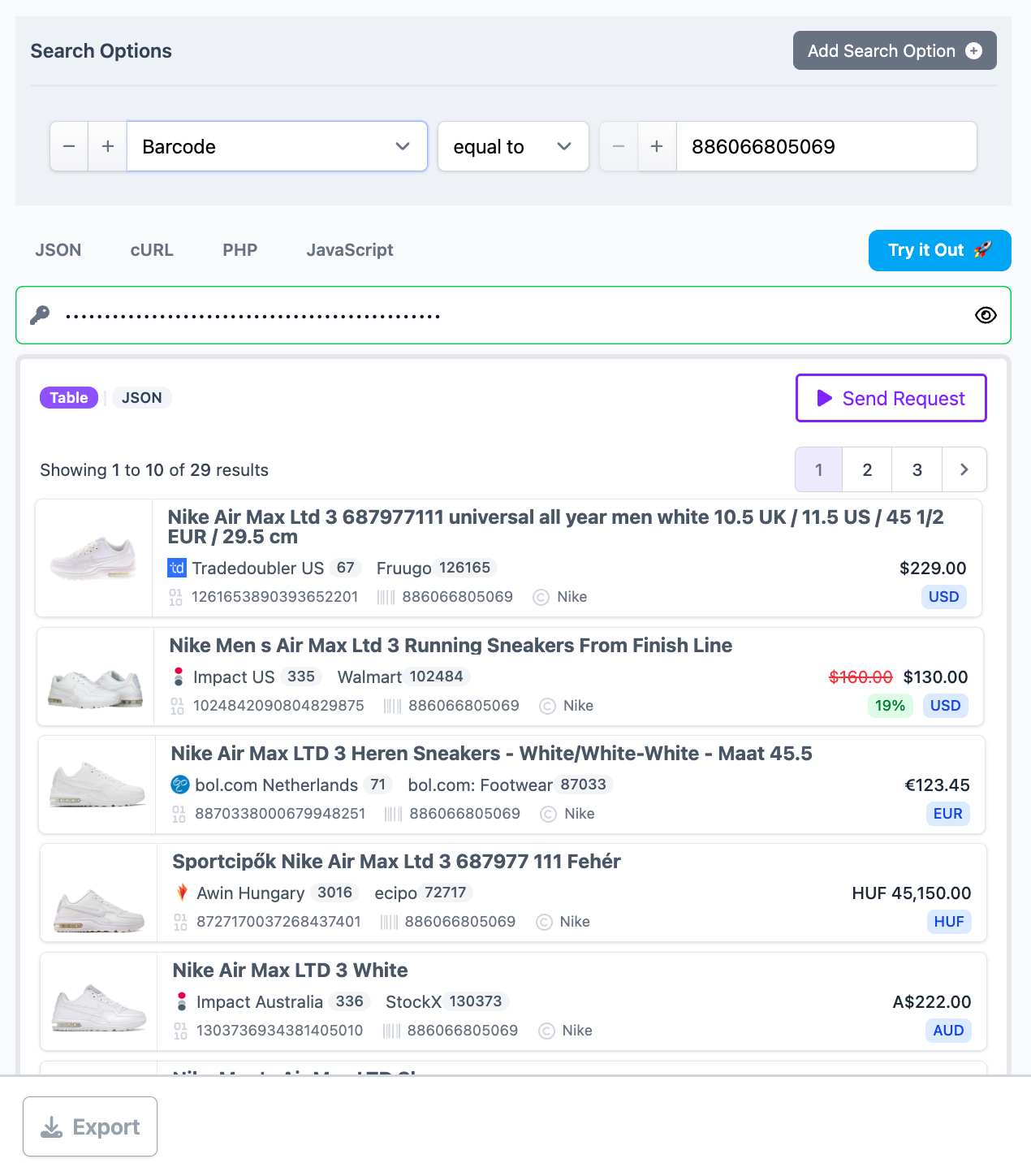
This allows publishers to:
- Identify the best deal for a single product across regions.
- Keep comparisons accurate even when prices are listed in different currencies.
- Build localized experiences that still tie back to one global dataset.
See what happens when currencies mix
The demo below lists the stores that sell each of a set of real products, in whatever currency each one lists. Rank them by the number, then filter to one currency and see what changes. Nothing is converted. The page holds a set of products that is rebuilt every week, last pulled November 24, 2026.
The products in the demo were chosen because their listings come in more than one currency, so they show what mixing currencies does, not how common it is.
Matching products across currencies is about more than exchange rates. It’s about maintaining consistency and ensuring that the same product ID connects across networks and regions while still reflecting accurate, local pricing.
The result is smoother global discovery. Instead of juggling regional feeds or manual conversions, publishers can focus on surfacing the most relevant offers — wherever they’re found.