
From Static Feeds to Searchable Experiences
Instead of downloading and sifting through merchant feeds, publishers can query one unified dataset. This article explains how searchable product data changes discovery and comparison.

Move beyond static feeds by turning product data into searchable, structured experiences.
Instead of downloading merchant files, uploading them into a system, and manually sifting through rows of data, publishers can query a unified dataset that spans more than 30 networks, 20,000 merchant programs, and over a billion products.
That shift changes how discovery, comparison, and content creation actually work.
What Searchable Experiences Unlock
With normalized, real-time product data available, discovery becomes dynamic. Publishers can:
- Search by brand, merchant, or product attributes
- Layer filters like price, availability, or discount to surface sharper results
- Match identical products across merchants for clean comparisons
- Build content that stays current as data refreshes automatically
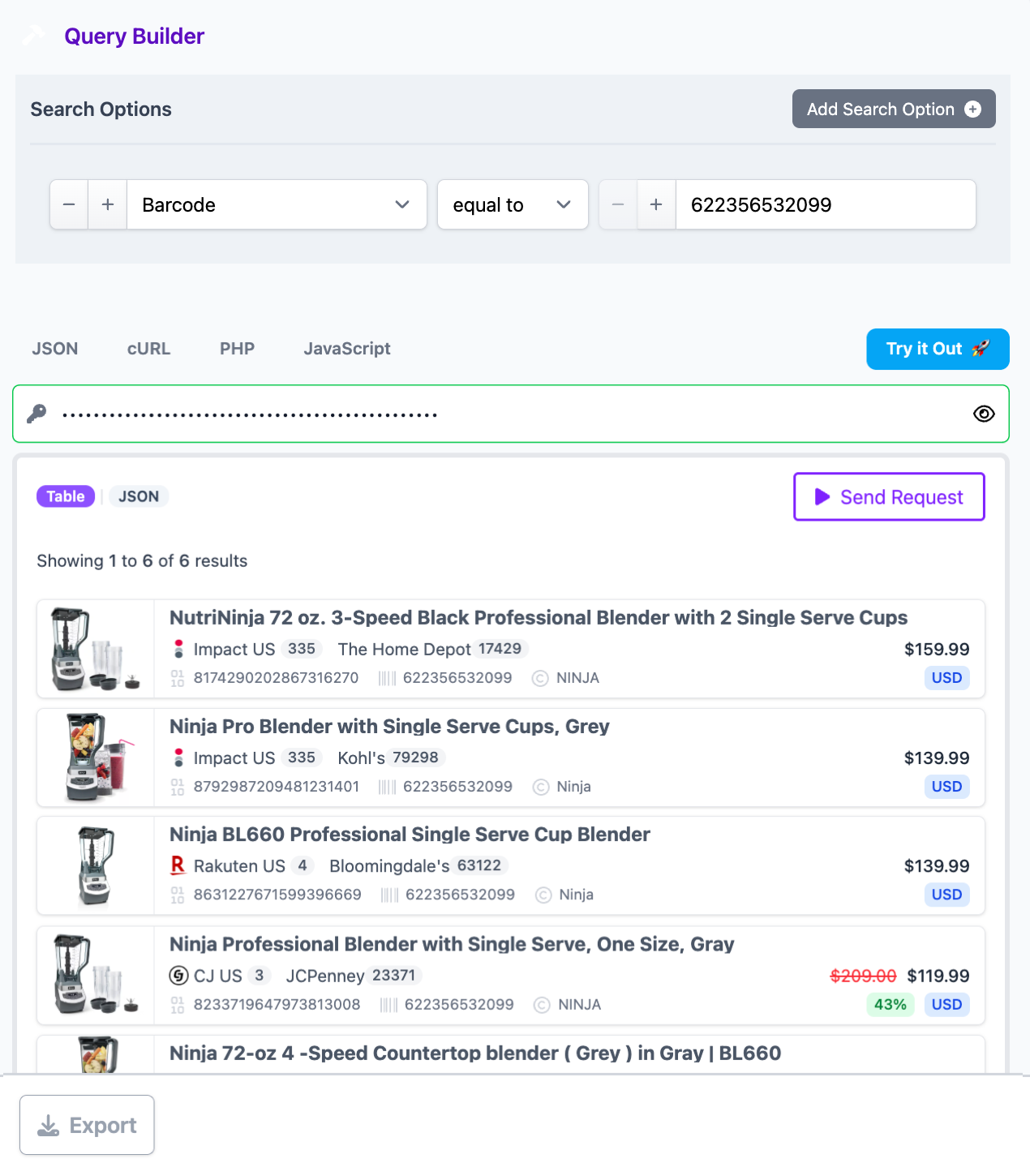
The difference is moving from static management to active discovery.
Try the filters on a real search
The demo below shows the first ten results of one real name search, exactly as they came back. Turn on the filters one at a time and watch how many of those results are still usable, with the request that would ask for the same thing. The page holds a set of searches that is rebuilt every week, last pulled November 24, 2026.
The searches in the demo were picked to show what a plain name search returns, so they show what the filters do, not an average result.
Instead of spending time wrangling feeds, publishers can focus on building shopping pages, recommendation tools, or deal sections that stay fresh by default.
Affiliate.com provides that layer, turning fragmented product data into something you can filter, compare, and curate in real time.
For more information, visit https://www.affiliate.com/programmatic-apis.